
Addiction is a complex issue that requires a variety of treatment options. An intensive outpatient program is one possible option. It allows a person to obtain care for substance abuse while they live at home. It can be a first step for some people. For others who have recently completed an inpatient program or are seeking care as part of a relapse prevention program, it may be a new step in their ongoing recovery journey.

Table of Contents
- 1 Understanding Addiction
- 2 Discovering the Benefits of Outpatient Programs
- 3 Exploring the Key Components of Quality Outpatient Programs
- 4 Determining If Outpatient Therapy Is the Best Choice
- 5 Appreciating the Limits of Outpatient Therapy
- 6 Contrasting Inpatient and Outpatient Therapies
- 7 Seeking Help With Outpatient Therapy From Miracles Recovery Center
- 8 Finding Additional Resources:
- 9 FAQ
Understanding Addiction
Addiction is a disease. This chronic relapsing disorder pushes those who suffer from it to compulsively seek out drugs or alcohol despite the negative consequences that their behavior brings.
Addiction isn’t a matter of willpower. There are actual physical changes in the brain. Addictive substances trigger changes in brain chemistry. Brain scans show that addiction also causes functional changes to distinct sections of the brain. These alterations can linger even after a person has stopped using. They impact areas that are vital for judgment, behavior control, decision-making, and memory and learning.
The physical shifts in the brain caused by addiction may be part of the reason for the compulsiveness of addiction. They may also cause changes in personality, intense cravings, distorted thinking, and other behavioral changes that are often seen in addicts.The psychological impacts of addiction are often further complicated by the presence of other mental health disorders. In addition, addicts frequently struggle with interpersonal problems in their personal and professional lives.
Discovering the Benefits of Outpatient Programs
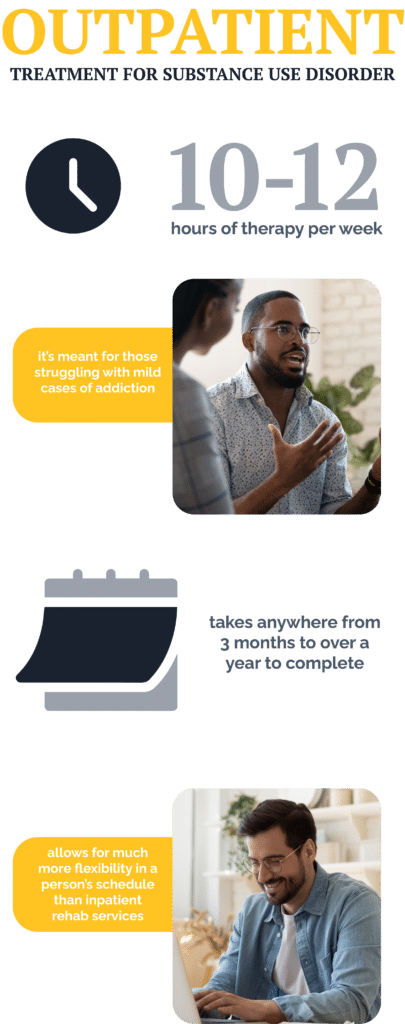
Addiction can be successfully treated, and outpatient treatment programs are popular. This type of program offers numerous advantages.
Flexibility
Outpatient programs allow individuals to continue living at home. While treatment is a priority, it still provides a fair amount of flexibility in scheduling, so patients can generally continue with work, school, and other activities. In contrast, inpatient or residential programs require patients to temporarily relocate to a dedicated treatment facility to focus exclusively on their treatment center.
Support
Because outpatient programs let people remain in their own homes as they receive treatment services for their addiction, they don’t lose touch with the people and routines that they regularly rely on. Maintaining these ties with family, friends, and the community can provide comfort and a familiar support network.
Application
Exploring coping strategies will be a major feature of any effective therapy or treatment plan for addiction. Participants in outpatient services are able to begin practicing these methods immediately while still receiving treatment. This allows them to return to their therapists with questions and comments and receive valuable feedback.
Affordability
Intensive outpatient treatment offers quality therapies and care, but they don’t require room and board or the level of care that other programs can. As a result, they are often more affordable than other types of addiction treatment rehab centers.
Exploring the Key Components of Quality Outpatient Programs
Outpatient programs will vary. However, quality ones tend to share certain key components. Knowing what to look for can help you feel confident about participating in a specific program.
Initial Assessment
If recovery is a journey, the initial assessment helps to establish a map. It is an opportunity to review the individual’s history and their experience with addiction so they can see where they’re coming from. It also provides a chance to outline their needs and discuss the goals that they hope to reach as they move forward with their treatment.
Therapy Sessions
Triumphing over addiction is possible but requires effort, skills, and support. Therapy helps individuals discover the tools that they need to win their battle with addiction. Because different types of therapy address different skill sets and issues, outpatient programs generally combine multiple forms of therapy to achieve the best results. These frequently include:
- Individual therapy: Individual psychotherapy involves one-on-one sessions where a patient and mental health professional work on underlying issues, build coping skills, and shape relapse prevention plans in a judgment-free zone.
- Group therapy: Meeting in groups with other recovery patients reduces feelings of isolation and stigmatization and inspires confidence that recovery is possible.
- Cognitive behavioral therapy: CBT teaches patients to recognize and change behavioral patterns that negatively impact their lives. CBT shows people how to identify a problematic craving and adjust their thoughts. Reconceptualizing these thoughts makes it easier to resist and redirect their energies to healthier behaviors and better healthcare.
- Motivational interviewing: A person-centered approach, motivational interviewing helps patients express for themselves why a change in their behavior matters. The goal is to guide the patient as they resolve insecurities and find internal motivation without inserting advice or pressure.
- Family therapy: A family member’s addiction impacts the entire unit. Their recovery will, too. Family therapy offers a way for everyone who wants to be involved to examine and reframe family relationships, build new skills, and restructure dynamics.
Medication Management Services
Sometimes, patients don’t fully understand why or how they should take their medications. That can lead to errors or noncompliance issues. Medication management services help overcome these hurdles by educating individuals and monitoring their medication intake. With these services, a provider takes the time to go over each medicine’s purpose, safety, and effectiveness. They also discuss the dos and don’ts of taking any medications so that the patient can avoid common mistakes. Then, the provider monitors their progress to support their success.
Skill-building Workshops
Sadly, addiction frequently has a destructive effect on the personal and professional lives of those whom it touches. Workshops provide excellent settings for people to learn a variety of skills. Popular topics include wellness techniques, stress management methods, coping skills, and relapse prevention. Sometimes, general life skills or occupational or educational subjects are offered.
Monitoring
Accountability is essential during recovery. Regular check-ins allow professionals to monitor a patient’s progress, note potential setbacks so that they can be addressed quickly, and identify when goals are reached so that they can be celebrated.
Support Groups
Having the support of peers can be invaluable. It provides a sense of community. Beyond that, it offers an empathetic audience who can provide specific support and advice. For those battling substance abuse, Alcoholics Anonymous, or AA, and Narcotics Anonymous, or NA, are popular support groups.
Determining If Outpatient Therapy Is the Best Choice
With a variety of addiction treatments available, selecting the best choice means weighing your options. How can you determine if outpatient therapy is the best choice? It’s helpful to consider a few factors.
What Is the Severity of the Addiction?
Those who have mild addictions often find that an outpatient program meets their needs well. However, addiction can be a difficult foe. Sweeping measures, like a change in scenery, are sometimes necessary to break the thoughts and habits that hold people in this condition’s clutches. Individuals with severe cases may do best in an inpatient or residential rehabilitation program.
How Will You Manage Your Responsibilities?
Outpatient therapy lets people working towards recovery from addiction get the treatment they need without putting their life on hold. They can still live at home, go to work or school, and continue with their family responsibilities. In contrast, more intensive treatment options disrupt the patient’s normal life. This can interfere with their ability to fulfill their personal and professional responsibilities.
What Is Your Existing Support Network Like?
An individual who is striving for recovery from substance abuse in a sober environment while surrounded by supportive family members is likely to thrive with outpatient therapy. However, someone who lives in a household where other family members or friends either exhibit or enable addictive behaviors is more vulnerable. This individual may find greater success if they seek treatment in a different environment.
What Are Your Expectations for Therapy and Yourself?
When it comes to therapy, commitment is essential. Therefore, it’s important to review your options with your personal preferences in mind. After all, it’s easier to commit fully to a program that feels like a good match for you. Do you prefer a program that allows you to balance your normal life with mastering the skills that you need to recover from your addiction? An outpatient program can be a good fit. Are you concerned that your commitment may falter without intensive supervision? Have you previously failed at an outpatient program? You might want to seek out a different option.
Appreciating the Limits of Outpatient Therapy
With their effectiveness, affordability, and flexibility, outpatient therapy programs have lots of fans. However, these programs are not suitable for everyone. It’s important to recognize that outpatient therapy does have limits:
- Individuals are responsible for attending therapy sessions regularly. This requires a personal commitment that not everyone can manage.
- Patients risk being exposed to their triggers as they continue with their daily lives.
- Patients with severe addictions may find outpatient therapy is insufficient for their needs.
Contrasting Inpatient and Outpatient Therapies
Inpatient drug treatment or substance abuse treatment for drug addiction is notably different from outpatient treatment. Although both formats provide quality care for addiction, inpatient treatment requires patients to stay with a residential treatment provider for the duration of their treatment. While there, they receive 24/7 supervision from staff. This is done to verify that all patients fully comply with their treatment protocols.Inpatient care provides an intensive level of support. That makes it an excellent option for people with severe addictions or unstable living environments. It’s also a solid choice for individuals who feel like they need to be away from the distractions of the regular world in order to be able to focus and fully commit to battling their addiction. However, it is more expensive and more disruptive than other forms of treatment.

Seeking Help With Outpatient Therapy From Miracles Recovery Center
Outpatient care delivers effective addiction treatment while still allowing patients to go about their normal lives. It will enable them to remain in their homes and their communities. Their support networks remain intact, and they’re able to fulfill their responsibilities. It’s also more affordable. Since this type of treatment requires more personal commitment and puts the individual at greater risk of exposure to triggers, it’s not appropriate for anyone worried about a serious addiction or an unsteady commitment to treatment. It can be a fantastic fit for those who are dealing with a mild addiction, seeking continuing treatment after finishing an inpatient rehab program or wishing to refresh their skills as part of a relapse prevention program.Substance abuse is a complex issue, but recovery is possible. If you or a loved one is struggling with addiction, discover how empowering seeking help can be. Reaching out to explore the available treatment options provides an opportunity to move toward healing. How do you find the best treatment path? Considering your needs is an excellent place to start. Many individuals appreciate the chance to receive treatment while continuing their work, living at home, remaining among family and friends, and keeping costs low. That makes outpatient treatment appealing. However, consulting with a professional to verify that this form of treatment will be a good fit for your needs is definitely important.
Miracles Recovery Center is located in Port St. Lucie on Florida’s Treasure Coast. We recognize that a life free of addiction is truly priceless. That’s why we work diligently to offer a wide range of treatment modalities, including outpatient therapy, to help our patients along the path to recovery. Do you know someone who can benefit from our services? Don’t hesitate. Reach out to Miracles Recovery Center today to learn more.
Finding Additional Resources:
Are you struggling to understand addiction and its impacts? These resources may be useful in your quest:
- “Drugs, Brains, and Behavior: The Science of Addiction” From the National Institute on Drug Abuse
- “What Is a Substance Use Disorder?” From the American Psychiatric Association
- “The Power and Perceptions of Understanding: Changing How We Deliver Treatment and Recovery Services. Why Addiction Is a ‘Disease,’ and Why It’s Important.” From the Substance Abuse and Mental Health Services Administration
FAQ
What is outpatient treatment?
How does outpatient treatment differ from inpatient treatment?
What types of therapies are used in outpatient treatment?
Will my insurance cover the cost of outpatient treatment in Florida?
What happens after I complete outpatient treatment in Florida?
How do I know if outpatient treatment is right for me or my loved one?
What level of care is recommended for individuals with severe or acute mental health or addiction conditions?
Why pick Miracles Recovery Center?