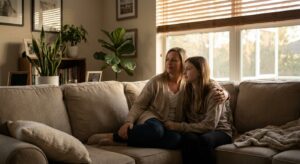

You have seen the pattern enough times to predict it. Your parent finishes another program, holds steady for a few weeks, then something old and unspoken surfaces and the drinking or the pills come back. You are the one managing the calls, the pharmacies, the doctors who each treat one piece and never the whole person. When you search for PTSD treatment in Port St. Lucie at Miracles Recovery Center, you are not looking for another facility that will patch the surface. You are looking for someone who will finally ask why this keeps happening and treat the thing underneath it.
That “why” is often trauma. When post-traumatic stress and a substance use disorder live in the same person, they feed each other. The substance quiets the nightmares and the racing heart for a while, and then the substance creates its own wreckage, which deepens the trauma. Miracles Recovery Center in Port St. Lucie treats both at once, from the first assessment, rather than fixing one and hoping the other settles on its own. This is what trauma-informed, whole-person care actually means, and it is an approach that may support more sustained recovery.
What Trauma-Informed PTSD Treatment Looks Like When Substance Use Is Part of the Picture
Trauma-informed treatment means the addiction and the PTSD are worked on together from day one, not one after the other. At Miracles, co-occurring conditions like PTSD, anxiety, and depression are addressed alongside the substance use disorder rather than waiting for one to disappear first, because untreated trauma can be a significant factor in relapse.
Here is why the order matters so much. When a program treats only the substance use, it can teach your parent to stay sober for a while. But the nightmares, the hypervigilance, and the emotional flooding that PTSD causes do not go away just because the drinking stopped. Those symptoms can return, and if the substance was the only tool your parent had to manage them, they may reach for it again. The relapse is not a failure of willpower, it can be a predictable result of leaving underlying factors untouched.
The reverse is also true. A program that only treats the mental health side, without building recovery skills, leaves your parent stabilized but without a plan for cravings, triggers, or high-risk situations. Integrated care addresses both gaps. From the start, Miracles combines psychiatric care, medication management, individual therapy, trauma-informed group therapy, and relapse prevention so the two conditions are treated as what they are: two halves of one problem. Trauma-focused therapies are among the tools that some people with PTSD find helpful, and pairing them with substance use treatment may support longer-term recovery, according to the VA National Center for PTSD.
Why Didn’t the Last Three Programs Hold?
Earlier programs may not have held because they treated the addiction as the whole story and left the trauma, depression, or anxiety underneath it unaddressed. That gap between addiction treatment and mental health care is where some relapses begin.
One client came to the Port St. Lucie program at Miracles Recovery Center after several unsuccessful attempts at treatment for alcohol and cocaine use. Each time he finished a program and went home, the untreated depression and anxiety became overwhelming, and within weeks he was using again. On paper, every program had done its job. In reality, none of them had touched the reason he drank and used in the first place. His clinical team recognized that treating the addiction alone might not work for him, because the emotional pain driving the substance use had never been addressed.
After a comprehensive assessment, the team treated his substance use disorder and his mental health at the same time through psychiatric care, medication management, individual therapy, trauma-informed group therapy, and relapse prevention. As his depression lifted, something shifted. He became more engaged in his care, slept more consistently, rebuilt daily routines, and started processing hard emotions without reaching for a substance. For this individual, treating the addiction alone may have left the drivers of relapse in place, while treating only the mental health side may have left him without the recovery skills to stay sober. Doing both together appeared to change the direction of his recovery. This is the specific gap that some programs leave open, and the one your parent may have fallen through more than once.
How Does Miracles Decide When Someone Is Ready for Deeper Trauma Work?
Miracles decides based on emotional stability and coping readiness, not a fixed number of days in treatment. Deeper trauma processing is introduced only after your parent can manage distress without being overwhelmed by it. Rushing that work can retraumatize a person and set recovery back, so the pace is set by the person, not a schedule.
Before moving past stabilization, clinicians at Miracles Recovery Center look for concrete readiness markers. They want to see that your parent can identify their triggers, recognize the early signs of escalation, use grounding and emotional-regulation skills with some consistency, maintain basic safety, and return to baseline after becoming activated. They also weigh sleep, medication stability, cravings, recent substance use, any suicidal or self-harm risk, and whether your parent has enough structure and support outside of the therapy room. If those pieces are shaky, the team strengthens them first. That may help protect your parent’s stability while still keeping the underlying PTSD on the treatment plan.
This decision is never made by one person in isolation. Readiness is discussed across the clinical team at Miracles Recovery Center. The primary therapist brings what they are seeing in individual sessions, while psychiatric providers, case management, and other clinical staff add what they observe about mood, functioning, attendance, medication response, and behavior throughout the day. For an aging parent juggling PTSD, depression, and a substance use disorder, that shared view matters. It means no single symptom gets missed, and the pace of trauma work reflects how your parent is actually doing, not just what a diagnosis says on a chart.
The Day-to-Day Trauma Work in PHP, IOP, and Outpatient Care
The daily work is practical and skill-based long before it becomes deep trauma processing. Across all three levels of care, trauma-informed PTSD treatment in Port St. Lucie at Miracles includes CBT-based trigger identification and thought restructuring, DBT distress-tolerance and emotion-regulation skills, Motivational Interviewing, grounding, mindfulness, trauma-informed group therapy, and relapse-prevention planning.
In plain terms, this is what your parent does each week. CBT helps them notice the thoughts that spiral into cravings or panic and learn to challenge them. DBT teaches distress tolerance, the ability to sit with a hard feeling without drinking, dissociating, or shutting down. Grounding and mindfulness give the nervous system a way to come back to the present when a memory or a trigger hits. Motivational Interviewing meets your parent where they are and builds their own reasons to keep going, which may matter for someone who has tried and relapsed before. Group therapy adds the piece isolation steals: the experience of being understood by people who have lived it too.
This work at Miracles Recovery Center continues across the Partial Hospitalization Program (PHP), the Intensive Outpatient Program (IOP), and outpatient (OP) aftercare, with the intensity stepping down as your parent grows steadier. PHP offers the most structure, often several weeks before a step down. IOP keeps strong support while your parent lives at home. OP holds the gains for the long haul. Deeper trauma-processing methods are added only once the coping foundation is solid, which is the sequencing that may help trauma work avoid causing harm. Substance use and mental health conditions frequently occur together, and treating them in one coordinated plan is the approach the National Institute on Drug Abuse recommends for co-occurring disorders.
Who Actually Delivers PTSD Treatment at Miracles?
The trauma work at Miracles Recovery Center is led by master’s-level behavioral health clinicians, typically licensed or license-eligible in clinical social work or mental health counseling, with direct experience treating trauma, substance use disorders, and co-occurring conditions. This is not care handed to whoever is available. It is delivered by people trained specifically for the overlap your parent lives with.
That training shapes everything about how the team works. Trauma-informed care means clinicians understand how trauma affects the nervous system, recognize hyperarousal and dissociation when they appear, work to protect both emotional and physical safety, and avoid interventions that could unintentionally overwhelm or retraumatize your parent. Clinical leadership provides supervision and case consultation to help ensure trauma work is introduced at an appropriate stage of treatment, not simply because someone carries a PTSD diagnosis. That layer of oversight is a safeguard for a parent who has been through the wringer of previous programs.
Outside verification backs this up. The Port St. Lucie facility of Miracles Recovery Center is accredited by The Joint Commission for its PHP, IOP, and outpatient substance-use treatment services and is licensed through the State of Florida. Those are not marketing badges. They are independent confirmations that the program meets real clinical standards, evaluated by people who do not work there. When you are trusting a facility with a parent’s life, that outside accountability is worth asking about, and here you can point to it directly.
Starting PTSD Treatment in Port St. Lucie Without Leaving Florida
You can access integrated, trauma-informed care for a parent right here, without shipping them to a program in another state. Miracles serves Port St. Lucie and surrounding Florida communities with PHP, IOP, and outpatient levels of care, plus telehealth, so treatment fits around the realities of an aging parent’s health, mobility, and support system.
Keeping care local matters more than it sounds. Your parent stays close to you, to their doctors, and to the routines that steady them, while still getting the intensive support that co-occurring PTSD and substance use may require. You stay involved instead of coordinating from hundreds of miles away. And the same team that treats the addiction is treating the trauma, so nothing gets lost in a handoff between separate providers, which is where some care breaks down for someone with a dual diagnosis.
On cost, Miracles accepts BCBS, Cigna, Aetna, UHC, PPO policies, and TRICARE. Benefits vary by plan, and the team can verify your parent’s coverage before admission so you know where you stand before making a decision. You do not have to have every answer today. You have to make one call and let the assessment do the work of sorting out what your parent actually needs.
Frequently Asked Questions
Can PTSD and substance use disorder be treated at the same time?
Yes. Integrated treatment addresses both together from day one, because untreated trauma can be a significant factor in relapse. At Miracles, psychiatric care, therapy, and relapse prevention run alongside each other rather than one after the other.
What does trauma-informed care mean in a substance use treatment program?
It means clinicians understand how trauma affects the nervous system, work to avoid interventions that could retraumatize your parent, and sequence trauma processing based on emotional readiness and coping skills rather than a diagnosis alone.
Do we need residential treatment for PTSD and addiction, or can outpatient work?
Some people with co-occurring PTSD and substance use respond well to PHP, IOP, or outpatient care when both conditions are treated together and trauma processing is appropriately paced. That level of PTSD treatment in Port St. Lucie is available close to home.
How do I know if my parent is ready for deeper trauma processing?
Clinicians at Miracles Recovery Center look for whether your parent can identify triggers, use grounding skills consistently, maintain basic safety, and return to baseline after becoming activated. Those markers, reviewed by the full team, may signal readiness before deeper work begins.
Does insurance cover PTSD treatment in Port St. Lucie at Miracles Recovery Center?
Miracles accepts BCBS, Cigna, Aetna, UHC, PPO plans, and TRICARE for PHP, IOP, and outpatient services. Benefits vary by plan and can be verified before admission.
What happens if trauma therapy becomes overwhelming during treatment?
The clinical team may slow the pace, return focus to stabilization and coping skills, and coordinate across therapist, psychiatric provider, and case management to help ensure your parent is safe and steady before advancing the work again.
Call Miracles Recovery Center in Port St. Lucie to verify your insurance and schedule an assessment that evaluates both substance use and trauma together, so treatment can address underlying factors from day one. Bring one worry to that call, the fear that this program will be like the last three, and ask exactly how they treat the addiction and the PTSD in the same plan. The answer to that question is where recovery may either hold or fall apart.
Start Your Healing in Port St. Lucie
If trauma has shaped how you move through the world, you already know that quick fixes don’t address what lies beneath. At Miracles Recovery Center in Port St. Lucie, our trauma-informed approach works with the root causes of PTSD, not just the symptoms. You don’t have to carry this alone anymore.
Individual results vary. The client experience described here is one person’s story and is not representative of typical outcomes.