
BCBS Addiction Treatment in Florida: Using Your Blue Cross Benefits for Recovery
A spouse once stood in the Miracles Recovery Center admissions office in Port St. Lucie at 2 p.m., holding her Blue Cross Blue Shield card and a slip of paper showing her deductible, out-of-pocket max, and coinsurance percentage. By 4 p.m. that same afternoon, she had answers on every number: what BCBS would pay, what her family would owe, which level of care was covered, and when her husband could start. The difference was not the insurance plan itself. It was that someone verified the actual benefits before asking her to commit to anything. That is what BCBS addiction treatment should feel like from the very first call, and it is what most families never get.
If you are holding a Blue Cross card right now and trying to figure out whether your loved one can start treatment today, take a breath. You called today, and that matters. You do not have to decide the rest of your life today. You only need to know what is true about your plan, and that is something a real person can tell you within hours, not weeks.
What BCBS Addiction Treatment Really Covers in Florida, and What It Does Not
Blue Cross Blue Shield covers substance use disorder and mental health treatment in Florida, including partial hospitalization (PHP), intensive outpatient (IOP), and standard outpatient care. Under the federal Mental Health Parity and Addiction Equity Act, your plan cannot treat addiction and mental health care worse than it treats care for a physical illness. That is the reason so much of this care is covered at all.
Here is the part families are often surprised by, and it is the part that matters most. Having Blue Cross and being on the accepted list does not automatically mean every treatment day is approved, or that treatment will be authorized for a specific length of time, or that you already know your real cost. A card tells you almost nothing about your deductible, your coinsurance, your out-of-pocket maximum, or whether your specific policy requires prior authorization for a level of care. Two people can hold what looks like the same BCBS plan and owe very different amounts. This is not the simple thing the member portal makes it look like. It is a set of specific numbers that only a full verification can reveal.
Addiction is a treatable medical condition, and evidence-based care works when it is matched to the person and delivered at the right intensity, something the National Institute on Drug Abuse has documented for years. Miracles Recovery Center accepts all BCBS plan types and levels, and coordinates with Florida Blue as well as out-of-state Blue Cross plans. The center provides PHP, IOP, and outpatient care using an integrated, trauma-informed approach with CBT, DBT, Motivational Interviewing, and trauma-informed care, all delivered by a multidisciplinary clinical team. In PHP, many clients spend roughly five weeks before stepping down to a less intensive level. What you will not find here is a facility that quotes you a price before it knows your plan, or that admits your loved one and figures out the money later.
How Does Miracles Verify Your Blue Cross Benefits the Same Day You Call?
Miracles verifies your Blue Cross benefits the same business day you call in many cases, and can begin coordinating admission within 24 hours when your loved one is clinically appropriate and authorization requirements are satisfied. You get real answers quickly, not a generic eligibility check that leaves you guessing.
Here is how it actually works. When you call, the admissions team collects the insurance information and passes it to an experienced third-party billing and utilization-management company whose entire day-to-day job is behavioral health insurance and reimbursement. Rather than relying on one staff member to interpret a Blue Cross plan, these specialists work the insurer’s provider portals and speak directly with BCBS when something needs clarification. They confirm eligibility and behavioral health benefits, whether the facility is in network, your deductible and out-of-pocket amounts, your copays or coinsurance, any prior authorization requirements, and coverage for the recommended level of care. The person handling verification stays in close contact with the clinical and admissions teams the whole time, and the admissions team then walks you through what all of it means in plain language.
The output you receive is specific, not vague. You learn your deductible status, your coinsurance percentage, your out-of-pocket maximum, whether prior authorization is required, and an estimated family responsibility before anyone asks you to commit. That last point is the whole difference. One Florida Blue Cross family called believing their plan would cover treatment almost completely, because someone had told them they had strong behavioral health benefits. Once the billing partner verified the actual policy, the coverage was good, but a deductible and coinsurance responsibility they had not expected were still in play. The admissions and billing teams walked the family through the real numbers, explained what Blue Cross was likely to cover at the recommended level of care, and clarified the estimated out-of-pocket amount before admission. They also made sure the clinical documentation supported the authorization request from the beginning. Nobody wants to be surprised by a bill later, and that is exactly why benefits are verified directly instead of trusting what a portal or insurance card appears to show.
What Will Your Family Actually Pay: Deductibles, Coinsurance, and Behavioral Health Cost-Sharing
What your family pays comes down to three moving parts: your deductible (what you pay before coverage kicks in), your coinsurance (the percentage you share after the deductible), and your out-of-pocket maximum (the ceiling on what you owe for the year). Behavioral health benefits sometimes carry different cost-sharing rules than medical claims, which is why the number on your portal is not always the number you will owe.
Many families in Port St. Lucie discover their real responsibility is different from what their member portal showed, and it can go either direction. Sometimes the amount is lower, because behavioral health services carry different cost-sharing than they assumed, or because part of the deductible has already been met. Sometimes it is higher, because a deductible reset at the start of the year or coinsurance applies at a rate they did not expect. For example, a family may walk in certain their loved one has a $5,000 deductible that must be paid in full before treatment can begin. When the actual policy is reviewed, the team may find that certain behavioral health services carry different cost-sharing requirements, or that a portion of that deductible has already been met. You cannot know this from the card. You can only know it from a real verification of the specific policy.
Before admission, one Florida family came in unsure whether behavioral health treatment would even be covered or what level of care their plan would authorize. The admissions team verified the benefits, reviewed the deductible and out-of-pocket responsibility, and confirmed coverage for the appropriate level of care up front. The biggest issue was translating the insurance language into what the family could realistically expect to pay, and the team handled the authorization process alongside the clinical staff so the family was not navigating it alone during a crisis. Once the benefits and clinical criteria were clear, the client entered treatment understanding both the coverage and the cost. For that family, the real difference was having one team coordinate the insurance and clinical pieces instead of being bounced back and forth between the provider and the insurer.
Miracles provides a clear picture of anticipated cost before admission so you can plan instead of worry. This is not about selling you on a number. It is about giving you a realistic financial picture up front, so you can focus on getting your loved one help rather than bracing for the unknown. The center typically admits about 10 to 15 clients per month with Blue Cross coverage across all plan types, and works with anyone regardless of financial situation when treatment is clinically appropriate. The most caring thing anyone can do here is tell you the truth about the money before you decide, not after.
What Happens When Blue Cross Questions Whether Your Loved One Still Needs Care?
When Blue Cross questions continued treatment days, the clinical team documents exactly why your loved one still needs the intensity of PHP or IOP, connecting current symptoms, relapse risk, and unmet goals to medical necessity standards. About 10 to 15 percent of initial preauthorization requests need additional documentation, reconsideration, or resubmission before approval, which usually means one or two clients in a typical month. When that happens, the team goes to work the same business day whenever the records are available.
Clinical Director Taylor Hooper works with the treatment team to evaluate each client’s progress, identify what still stands in the way of recovery, and determine whether the current level of care remains appropriate. The admissions team and billing company then translate that clinical picture into the documentation the insurer requires. The approach connects three things: what the client is experiencing now, how those symptoms affect their ability to function safely and stay in recovery, and why the requested level of care is necessary to address those needs. That is measured against ASAM criteria and the specific medical necessity rules of the client’s Blue Cross plan.
Consider a real kind of case the clinical team handles. A client in PHP for alcohol use disorder and co-occurring PTSD had made genuine progress, with consistent group attendance, active individual therapy, and sustained sobriety. When the continued-stay review came, Blue Cross questioned whether PHP was still needed or whether the client could step down to IOP, and the first request for more PHP days was not approved, because the documentation showed improvement but did not explain why the structure was still required. The clinical team then documented three things: persistent PTSD symptoms tied to relapse risk, including sleep disturbances, intrusive memories, emotional dysregulation, and anxiety that fed alcohol cravings; specific situations where the client could not yet apply coping skills without staff support; and a measurable treatment plan with clear step-down criteria, such as improved emotional regulation and consistent use of relapse-prevention skills. In that scenario, Blue Cross approved additional days after reviewing the updated record, and the client kept working toward those goals before transitioning to IOP. The distinction is everything. The team was not simply asking for more time, it was showing what clinical risk remained and what progress would prove the client was ready to step down.
The reconsideration follows five steps: identify exactly what the insurer needs, notify the clinical team directly with the specific information required rather than asking for a whole new assessment, gather and update the documentation, submit it through the billing company (with a peer-to-peer review between the insurer’s clinician and the appropriate provider when needed), and keep the family informed the whole way. Because this is a smaller program, these requests move without unnecessary layers of approval, and the goal is to submit outstanding documentation within the same business day when the records are available. You are not left navigating an appeal alone during a crisis. One team handles the insurance and clinical pieces together, so you are never passed back and forth.
Using Your Florida BCBS Plan at Miracles Recovery Center in Port St. Lucie
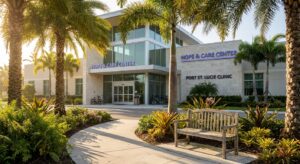
Yes, you can use your Florida BCBS or Florida Blue plan at Miracles Recovery Center even if you live somewhere else in the state. Families calling from Miami, Jacksonville, Tampa, or Orlando verify benefits and coordinate admission to the Port St. Lucie facility every month. Geography is a coordination detail here, not a barrier.
For your first call, have three things handy: your member ID, your group number, and any recent explanation of benefits statements you have received. That is enough to start verification. If you do not have all of it, call anyway, because the team can often locate what is missing. If your loved one needs a higher level of care first, such as medical detox that Miracles does not provide on site, the team will prioritize getting them to the appropriate services rather than letting an outpatient authorization process delay urgent care, and will help point you toward a trusted detox partner and coordinate the next right step. Public resources like the federal substance abuse help guide can also help you find nearby options while you sort out coverage.
Miracles is licensed by the State of Florida and accredited by The Joint Commission for its PHP, IOP, and outpatient substance use treatment services. Those are outside confirmations that the program meets real clinical benchmarks, not marketing claims. This is a small, family-focused center, which is the reason continued-stay cases and authorization questions get individualized attention instead of getting lost in an assembly line. You want your loved one seen, heard, and understood, not treated like a number, and the whole point of a smaller program is that we meet each person where they are. The aim of every treatment plan here is simple and honest: whole-person, evidence-based care that helps someone build a lasting recovery, because lasting recovery is possible.
Common Questions About BCBS Addiction Treatment and Your Blue Cross Benefits
Does Blue Cross Blue Shield cover addiction treatment in Florida?
Yes. BCBS covers substance use disorder treatment in Florida under federal parity law, including PHP, IOP, and outpatient care. What your family actually pays depends on your specific deductible, coinsurance, and any prior authorization requirements, which a full benefit verification identifies before admission. Miracles accepts all BCBS plans and all levels of care.
How long does BCBS benefit verification take at Miracles Recovery Center?
Miracles coordinates with a specialized behavioral health billing and utilization-management company to verify BCBS benefits the same business day you call in many cases, often providing cost and coverage answers within hours. When your loved one is clinically appropriate and authorization requirements are met, admission can be coordinated within 24 hours. A straightforward authorization request may add roughly 24 to 72 hours depending on the plan and documentation.
What happens if Blue Cross denies authorization for continued treatment?
The clinical team, led by Clinical Director Taylor Hooper, gathers updated assessment data, ASAM justification, and relapse-risk documentation to resubmit or appeal the decision. The team aims to turn this around the same business day whenever the necessary records are available, and keeps your family informed throughout.
Can I use my Florida Blue plan at Miracles if I live outside Port St. Lucie?
Yes. Miracles coordinates with Florida BCBS plans and accepts members from across the state, including families in Miami, Jacksonville, Tampa, and Orlando. Benefits are verified and admission is arranged to the Port St. Lucie facility regardless of your home city.
Will my BCBS deductible apply to addiction treatment?
Most plans apply your medical deductible to behavioral health services, but some BCBS policies carry a separate behavioral health deductible or a different coinsurance rate, and sometimes part of the deductible has already been met. Miracles identifies exactly how your policy handles this during verification, so you get a real number instead of a guess.
How many BCBS clients does Miracles admit each month?
Miracles typically admits about 10 to 15 clients per month with Blue Cross Blue Shield coverage across all plan types and all levels of care. The center works with anyone regardless of financial situation when treatment is clinically appropriate.
Call Miracles Recovery Center in Port St. Lucie today to verify your Blue Cross Blue Shield benefits, understand your anticipated cost, and learn when your loved one can start PHP, IOP, or outpatient treatment. Bring your member ID, group number, and any recent explanation of benefits, and you can have real answers about coverage and cost before you commit to anything. The families who feel the most relief are almost always the ones who called before they had every answer figured out, because that first call is where the guessing finally stops.
Individual results vary. The client examples described here reflect one person’s experience and are not a promise or prediction of any specific outcome or coverage determination.