Florida has hundreds of treatment programs, but if you are searching for “rehab with private rooms Florida,” you are probably looking for more than basic care. You want medically sound treatment plus privacy, comfort, and dignity during a vulnerable time. Choosing a program with private accommodations can make a real difference in how safe and focused you feel while you heal.
This guide walks you through why private rooms matter, how they work in Florida rehab settings, what they cost, how insurance and payment options typically work, and what to consider as you start admissions and arrange logistics.
Why private rooms can support healing
Private rooms are not only a luxury upgrade. In many cases they directly support your ability to participate fully in treatment.
Privacy, dignity, and emotional safety
In a residential setting you share your story in therapy, confront painful memories, and experience withdrawal or emotional ups and downs. Doing that while sharing a bedroom and bathroom with strangers is difficult for many people.
Rehabs with private rooms offer you:
- A secure space to decompress after intense groups
- A place to cry, journal, pray, or call loved ones without worrying who is listening
- Better control over light, noise, and sleep schedule
Facilities like WhiteSands Treatment Center in Florida highlight that private rooms with queen beds, full bathrooms, and flat screen televisions help reduce anxiety and agitation during treatment, which can support better outcomes [1].
Better rest and focus on treatment
Sleep is one of the most important but overlooked parts of recovery. In early detox and treatment your body and brain are trying to stabilize. Sharing a room can mean dealing with snoring, different sleep schedules, or a roommate who is also in crisis.
A private room gives you greater control over your environment so you can rest more consistently. You are more likely to stay engaged in group work, individual therapy, and relapse prevention when you are not exhausted from being woken up all night.
Reduced conflicts and sensory overload
Inpatient treatment brings together people with very different personalities, histories, and coping styles. Shared rooms sometimes lead to:
- Personality clashes or boundary issues
- Triggers related to noise, habits, or hygiene
- Increased stress for people with trauma or social anxiety
Rehabs that offer private rooms intentionally reduce those friction points. Many of the Florida programs listed on Recovery.com describe private rooms as part of their calm and personalized setting, including River Oaks Treatment Center and The Wave of North Florida, which both feature hotel-style or supportive private room accommodations [2].
What “rehab with private rooms” in Florida usually includes
Not every program uses the term “luxury,” but in practice, rehab with private rooms in Florida often overlaps with higher end or executive style care.
Typical room features and amenities
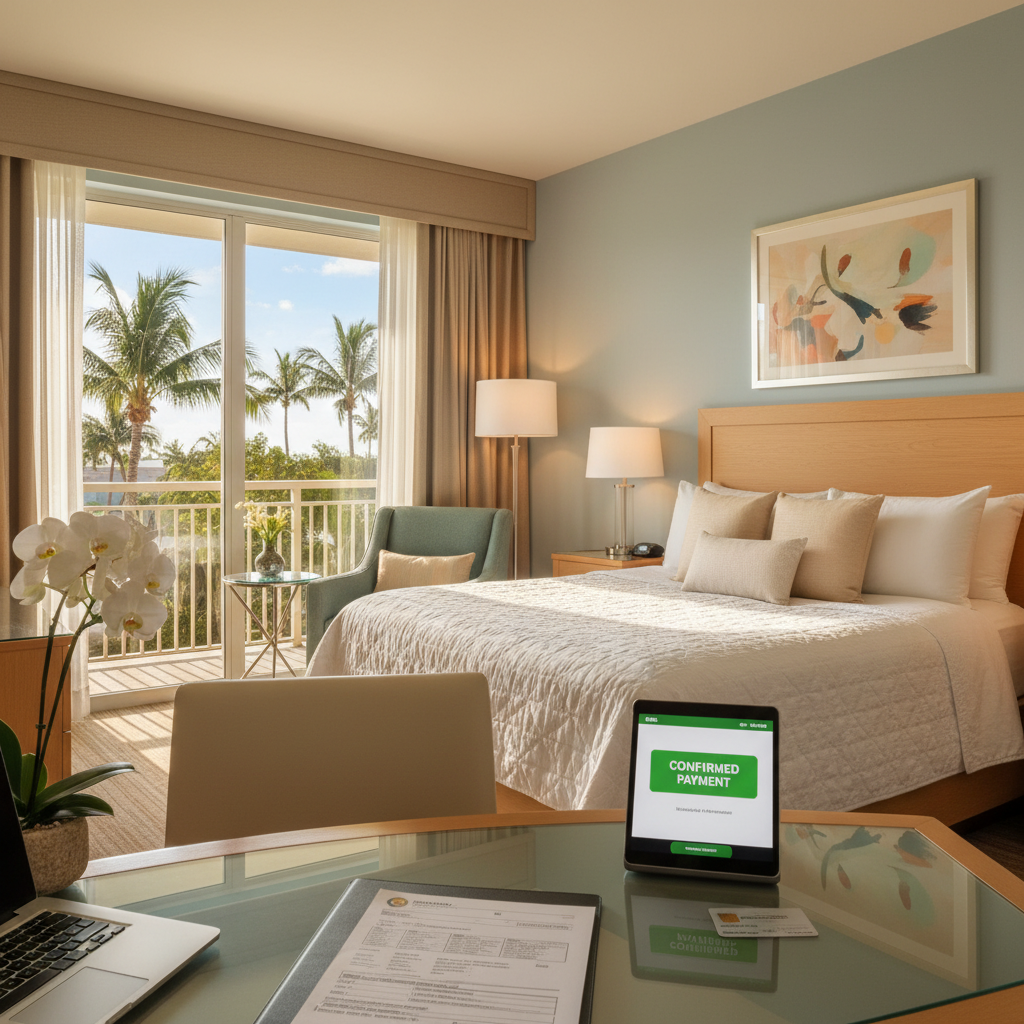
Private room offerings vary, but common features include:
- Single occupancy bedroom
- Private or semi private bathroom
- Comfortable bed, often full or queen size
- Basic furnishings like a desk, chair, and storage
- Television or streaming access during non clinical hours
Some centers in Florida go further. WhiteSands, for example, describes updated rooms that overlook pools and outdoor lounge areas, with patios where you can eat meals privately if you prefer [1].
Luxury programs listed on Recovery.com may add:
- Suites rather than standard rooms
- Upscale finishes and hotel style linens
- Scenic settings such as lakeside estates or secluded “oasis” campuses [3]
High end and executive programs
At the very top of the market you find programs designed for executives, professionals, and public figures. In Florida, examples like the ORENDA Program at Futures Recovery Healthcare, Headwaters in West Palm Beach, and Park Manor Recovery offer all private rooms or individual suites, with intensive medical, psychological, and wellness services. These programs can cost in the range of tens of thousands of dollars for 28 to 30 days [3].
These settings are not necessary for everyone, but if you need a high degree of privacy, flexible scheduling, and a low staff to client ratio, they can be worth considering as part of your search.
Clinical care and safety in private room rehabs
The presence of private rooms tells you about environment and amenities, not clinical quality by itself. You still want to evaluate treatment credentials and safety standards.
Evidence based treatment and medical detox
Most reputable inpatient rehabs in Florida, including those offering private rooms, focus on evidence based services such as:
- Medically supervised detox when needed
- Individual counseling
- Group therapy and psychoeducation
- Relapse prevention planning
- Medication management for co occurring disorders
Luxury rehabs often add holistic modalities and fitness services like yoga, meditation, acupuncture, and personal training to support your mind, body, and spirit [4].
Accreditation and licensing
Accreditations like The Joint Commission or CARF are helpful signals that a facility meets recognized quality and safety standards. Many Florida rehabs with private rooms, including Recovery Centers of America at Mount Dora and Park Manor Recovery, hold these third party accreditations [5].
As you compare programs, confirm:
- State licensing as a substance use treatment provider
- Accreditation status
- 24/7 medical or nursing coverage, especially if you need detox
Cost of rehab with private rooms in Florida
Florida sits in the middle range nationally for residential rehab costs, but private rooms and luxury amenities usually increase price.
How private rooms affect pricing
A private room means the facility cannot spread housing costs across multiple people, so your daily or monthly rate is higher. Rehabs.com notes that private room inpatient programs are often more upscale and typically cost more than shared room facilities for this reason [6].
Several factors shape your total price:
- Level of care, detox is more expensive than standard residential
- Length of stay, short term is often 3 to 6 weeks while long term can run 6 to 12 months in residential settings [7]
- Amenity level, basic private room versus resort style campus
- Whether the facility is nonprofit, state funded, or privately owned
Privately owned and luxury centers tend to charge more, especially in a higher cost of living state like Florida, and the highest end rehabs can cost tens of thousands of dollars per month [8].
For a clearer picture tailored to your situation you can use a resource like a local rehab cost estimate florida tool, or speak with an admissions team directly.
Florida in state cost context
Data on treatment pricing suggests that:
- Florida ranks around 21st from cheapest to most expensive for residential, non hospital rehab
- Outpatient treatment costs in Florida are similar to states like Ohio, Virginia, Colorado, and Connecticut, indicating fairly standardized pricing across these locations [7]
This means Florida is not the cheapest place to attend rehab, but it is not at the very top of the price spectrum either. The presence of many private and luxury programs does, however, create a wide cost range.
If you are comparing specific options, resources like rehab cost florida can help you benchmark what you are being quoted.
How insurance typically works for private room rehab
A key question is whether your health plan will help pay for a rehab with private rooms in Florida, and if so, how much.
What insurers usually cover
Most commercial insurance plans follow a similar pattern:
- Medically necessary services like detox and behavioral therapies are often covered
- Comfort or luxury amenities such as private rooms, massages, and gourmet meals are usually not covered, or they are only partially covered [4]
In practice, this can look like:
- Your insurer paying an “allowed amount” for residential treatment days
- You paying the difference for upgraded accommodations and some ancillary services
- Separate copays, deductibles, and coinsurance that still apply
Some Florida rehabs that offer private rooms accept major insurance but not Medicaid or Medicare, so it is critical to verify benefits before you commit to a program [9].
Network status and your out of pocket cost
Whether a rehab is in network or out of network with your insurance plan strongly influences your cost.
- In network: You typically pay less per day, and preauthorization is coordinated between the facility and your insurer.
- Out of network: Coverage may be limited or not available on some plans, and you may owe a higher share of the bill.
Many Florida centers described in national directories accept most major commercial plans and can guide you through verification. To see how your own coverage lines up with specific Florida providers, tools such as miracles in-network providers florida, rehab accepting aetna florida, or rehab accepting cigna fl can give you a starting point.
You can also submit your information through a secure form such as verify insurance for miracles fl to get a more personalized breakdown.
Medicaid, Medicare, and state funded options
Research indicates that:
- Private, for profit luxury rehabs are less likely to accept Medicaid compared to nonprofit centers
- Many Florida rehabs with private rooms and higher end amenities do not take Medicaid or Medicare, so you would need private insurance or self pay funding [10]
If you rely on public insurance, you may still access quality treatment, but you might have fewer options that include private rooms. In that case you may want to balance your desire for a private room with your need for coverage.
Payment options if you are self paying
If you do not have insurance, or if your plan only covers a portion of your care, you have several potential payment strategies.
Self pay and financing
Many inpatient rehabs, including those in Florida, offer:
- Discounted self pay rates compared to billed insurance rates
- Pay in full discounts for shorter stays
- Third party financing or payment plans to spread costs over time [8]
A dedicated page like self-pay rehab florida can help you understand how self funded treatment typically works in your area and what to expect from admissions teams.
Scholarships, sliding scales, and assistance
Nonprofit and state funded rehabs sometimes:
- Provide free or low cost treatment to people who meet income criteria
- Offer fewer amenities and may not include private rooms
- Have waiting lists due to high demand [8]
Since Florida faces a serious prescription drug overdose problem, with a high daily toll of deaths, demand for treatment is significant [7]. This can make it harder to secure a state funded bed quickly.
If cost is your biggest barrier, exploring options like rehab financial assistance fl or speaking with a rehab consulting service florida can help you map out realistic next steps.
Admissions and enrollment process for private room rehabs
Once you identify a rehab with private rooms that fits your clinical and financial needs, the next step is admission.
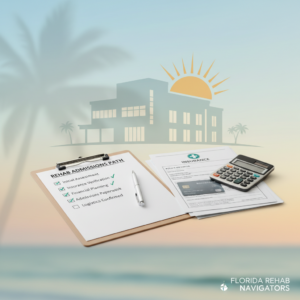
Typical intake steps
While each facility is a little different, you can expect a process similar to:
-
Initial call or online inquiry
You share basic information about your substance use, mental health, medical history, and insurance. -
Clinical and financial assessment
The team reviews whether they can safely meet your needs and gives you a preliminary cost estimate. Tools like rehab payment options florida or rehab cost estimate florida may support this step. -
Insurance verification and preauthorization
If you are using insurance, staff will contact your insurer to verify benefits. You can also start this yourself through verify insurance for miracles fl. -
Completion of application and consent forms
Programs may have a formal rehab application process florida, especially for higher end or executive programs that prescreen clients carefully. -
Scheduling admission and arranging logistics
Once accepted, you set an admission date, address transportation, and receive packing guidance.
If you are entering a program in or near Port St. Lucie, a local intake guide like rehab intake port st. lucie can give you clearer expectations.
Waiting lists and room availability
Because private rooms are limited, some Florida rehabs:
- Have wait lists specifically for private room placements
- May offer immediate admission into a shared room with the option to move when a private room opens
- Prioritize private rooms for people with clinical needs, for example trauma or medical complexity
Rehabs.com notes that private rooms are not the standard in inpatient treatment, and that they can take longer to secure compared to shared beds [6]. If having a private room is non negotiable for you, make this clear early in your admissions conversations.
Confidentiality and discretion
If you are concerned about privacy related to work, community reputation, or public visibility, you can look for:
- Programs that explicitly market confidential or executive services
- Secure, secluded campuses designed for discreet arrival and stay
- Clear policies on communication with employers, families, and outside parties
Resources like confidential rehab admissions fl can help answer specific questions about how your information is handled during the admission process.
Transportation and location considerations in Florida
Where your rehab is located and how you will get there are practical but important pieces of your plan.
Choosing a region within Florida
Different areas of the state offer different atmospheres:
- Coastal or beach areas may feel more like a retreat, with resort style amenities
- Central or suburban areas may focus more on medical campus style care
- North versus South Florida differ in climate, pace, and travel access
Luxury rehab centers in Florida often emphasize serene settings such as beach views, pools, and spa like facilities, which can support a sense of calm and focus during treatment [3].
You might prefer to:
- Stay close to home and existing support, or
- Travel to a different part of the state to create distance from triggers and using environments
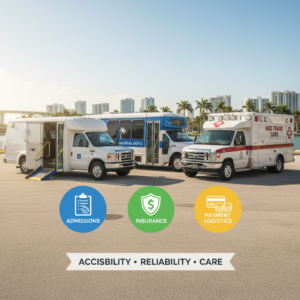
Getting to and from treatment
Most inpatient rehabs will:
- Provide directions and transportation guidance
- Help you coordinate rides from airports or major transit hubs
- Work with you on safe discharge planning when treatment ends
If you are coming from within Florida or a neighboring state, it can be helpful to review options like rehab transportation options florida as you plan.
Putting it all together and taking your next step
Choosing a rehab with private rooms in Florida means balancing environment, clinical care, and finances.
When you evaluate programs, focus on:
- Whether they provide a private room and what it includes
- Accreditation, licensing, and evidence based treatment offerings
- In network status with your insurance and estimated out of pocket cost
- Availability of payment plans, scholarships, or assistance if you are self paying
- Location and transportation logistics that make admission realistic for you
If you are ready to move forward, you can:
- Learn how to begin the process through a step by step resource like how to start rehab florida
- Review rehab enrollment florida to understand paperwork and timelines
- Connect directly with a local admissions team such as miracles recovery admissions florida for personalized guidance
You do not have to navigate all of this alone. With the right information and support, you can choose a Florida rehab with private rooms that respects your privacy, fits your budget, and gives you a solid foundation for long term recovery.