
What a rehab cost estimate in Florida really means
When you first start searching for help, it is normal to fixate on one question: how much will rehab cost in Florida. A clear rehab cost estimate in Florida helps you understand what you might pay, what insurance may cover, and which level of care makes sense for your family’s budget and clinical needs.
Costs range widely. Some programs in Florida are free or low cost, while others can reach thousands of dollars per day depending on setting, location, and amenities [1]. Your goal is not to find the “cheapest” option. Your goal is to find safe, evidence based care you can realistically afford with the help of insurance, financial assistance, and payment planning.
A good estimate should show you:
- The recommended level of care
- The expected length of stay
- The gross program cost
- Your insurance contribution and your portion
- Any additional fees or optional upgrades
With that information you can compare programs confidently, rather than guessing or delaying treatment because of cost fears.
For a broader overview of typical state costs, you can also review our companion guide on rehab cost Florida.
Typical rehab cost ranges in Florida
Florida is considered mid range nationally for residential addiction treatment pricing [2]. Within the state, costs shift based on program intensity, location, and amenities.
Current data show that:
- A 30 day inpatient program in Florida often averages between 20,000 and 44,000 dollars, with some facilities costing more than 100,000 dollars for the same period [3]
- Three months of outpatient services usually range between 2,000 and 8,000 dollars in the state [3]
- Nationally, the average cost of a treatment episode has been estimated at 13,475 dollars, which gives you a general benchmark when looking at Florida pricing [2]
Residential treatment prices in Florida generally fall in the middle of Southeast regional averages, with coastal and high population areas tending to cost more than inland counties because of real estate and labor expenses [4]. Outpatient costs are more stable statewide because many programs accept Medicaid and private insurance, which evens out pricing in cities like Orlando, Tampa, Jacksonville, and Miami [4].
If you are comparing programs, you can expect:
- Higher pricing in coastal South Florida or luxury settings
- More moderate pricing in inland counties and community based centers
- Lower gross cost when services are primarily outpatient rather than residential
A personalized rehab cost estimate in Florida will put your situation into these ranges so you know where you stand.
Key factors that shape your rehab cost estimate in Florida
No two estimates look exactly alike. Your final rehab cost depends on a combination of clinical and practical factors.
Level of care and intensity
The level of care is one of the most important drivers of cost.
- Inpatient or residential rehab includes 24 hour medical and emotional support and usually involves a stay of 30 days up to 6 months or more. These programs cost more because they include housing, food, and round the clock staffing [5].
- Partial hospitalization programs (PHP) provide about 5 to 6 hours of treatment each day.
- Intensive outpatient programs (IOP) usually provide around 3 hours per day of structured treatment [5].
- Standard outpatient services involve fewer hours per week and are the least expensive level of formal treatment.
In Florida, inpatient rehab generally costs more than outpatient because of the housing and intensive care requirements [1].
Medical detoxification needs
Your need for medical detox also affects your estimate. Detox for alcohol or opioids like heroin typically requires medications, nursing supervision, and physician oversight. This increases cost compared to substances that may not require formal detox, such as some cases of cocaine use [1].
Some people can safely complete outpatient detox, which can reduce expense while still providing regular physical and mental check ups [5]. Others require inpatient detox due to medical risk. Your clinical assessment will clarify which is appropriate for you.
Length of stay
Longer stays cost more in total, although the per day rate often remains similar. In general:
- Detox lasts from several days to around 2 weeks
- Primary residential treatment typically ranges from 30 to 60 days
- Some programs extend to 90 days or longer
Your estimate should show both the total projected cost for the full stay and how that might change if your length of stay is adjusted based on progress.
Location and facility type
Florida’s geographic diversity leads to cost differences:
- Coastal and metropolitan regions tend to be more expensive than inland counties, especially for residential treatment [4]
- South Florida has a strong private market with many specialized and luxury services, which raises prices in that area [4]
Luxury programs with private accommodations, gourmet meals, and spa like amenities can range from 60,000 to 150,000 dollars for a month of treatment [3]. High quality care is available at much lower price points if you do not need those extra amenities.
If you are specifically looking for a more private environment, you can explore options such as rehab with private rooms Florida to see how this feature may factor into your cost.
Insurance coverage and benefits
The structure of your health insurance is another major factor. Since 2014 the Affordable Care Act has required new small group and individual plans to cover substance use disorder services as an essential health benefit [6]. That means:
- Most ACA compliant plans include some coverage for inpatient and outpatient addiction treatment
- Medicaid, funded jointly by Florida and the federal government, also covers many addiction services including inpatient and outpatient care, often with no copays [6]
However, there can be:
- Deductibles you must meet before coverage starts
- Copays or coinsurance for each day or session
- Limitations on certain services or amenities
- Requirements for prior authorization or referrals
You can use resources like verify insurance for miracles fl or miracles in-network providers florida to understand how your plan would apply at a specific facility.
Program quality and accreditation
High quality programs invest in licensed staff, accreditation, and evidence based services. You will see this reflected in cost estimates, but these features also protect your loved one’s safety and improve the chance of lasting recovery.
In Florida many respected treatment centers are accredited by organizations such as The Joint Commission, and they typically accept a range of insurance types [7]. When you compare estimates, consider what is actually included: medical care, licensed therapists, family services, aftercare planning, and so on.
How insurance affects your Florida rehab cost estimate
Insurance can feel complicated, yet it often provides the largest reduction in out of pocket cost.
ACA, Medicaid, and private insurance basics
Under the Affordable Care Act, rehab for substance use disorders is one of ten essential health benefits. All ACA compliant health plans must include coverage for these services, although cost sharing such as deductibles and copays still applies [8].
In Florida this means:
- Marketplace plans include substance use treatment coverage
- Many employer plans follow similar standards
- Medicaid covers inpatient, outpatient, and other basics for alcohol and drug dependency treatment, usually with minimal or no copays, although each facility decides which plans to accept [6]
If your household income is less than 400 percent of the federal poverty level, you may qualify for federal subsidies that reduce your monthly insurance premiums on the state marketplace, which makes rehab coverage more affordable [8].
In network vs out of network estimates
Your total cost changes significantly depending on whether a facility is in network with your plan.
- In network programs have contracted rates with your insurer, which often leads to lower deductibles and copays
- Out of network programs may still be covered, but at higher patient responsibility, and in some cases not at all
Some facilities highlight specific in network relationships, for example programs that are a rehab accepting aetna florida or rehab accepting cigna fl. Checking these details before you request a rehab cost estimate in Florida can prevent surprises.
Most major insurance brands, including Blue Cross Blue Shield, Aetna, Cigna, Humana, and United Healthcare, typically cover alcohol and drug rehab in some form [6]. The exact copay, deductible, and covered services will depend on your individual policy.
What your estimate should show
A clear insurance based estimate should include:
- The full program charge
- The portion the insurer is expected to pay
- Your remaining deductible
- Your estimated coinsurance or copays
- Any non covered services that would be entirely self pay
Some ACA plans require a referral from your primary care physician or prior authorization for addiction treatment, and some may not cover every type of addiction service equally [8]. Ask the admissions team to factor these requirements into your estimate.
If you are planning to use insurance, review step by step guidance in rehab payment options florida so you can prepare paperwork in advance.
Options if you have limited insurance or no coverage
Concerns about cost prevent many people from seeking help. In 2021 more than 46 million Americans met criteria for a substance use disorder, and 94 percent did not receive treatment. The perceived high cost of rehab is one major barrier [6].
Florida does offer options if you have little or no insurance.
State funded and nonprofit programs
State funded rehab centers in Florida provide free or low cost treatment to residents who cannot otherwise afford care. These programs are intended for individuals with limited financial resources and insufficient insurance [9].
Key points:
- Costs are significantly lower than private facilities and may be zero for qualifying individuals [9]
- Eligibility usually requires Florida residency, income below certain limits, a diagnosed substance use disorder, and having Medicaid or other state funded insurance if applicable [9]
- Due to limited funding and high demand, waiting lists are common. High risk groups such as pregnant women often receive priority, and outpatient or medication assisted therapies may be offered while you wait [9]
Nonprofit organizations and county supported programs sometimes use sliding scale fees. Comparing coastal versus inland regions and exploring nonprofit options can help reduce your estimated cost [4].
For additional guidance, you can review resources like rehab financial assistance fl or speak with a rehab consulting service florida to map out your options.
Self pay and financing
If you are paying largely out of pocket, you are not alone. Many families combine several resources:
- Savings
- Medical or personal loans
- Credit cards
- Provider based payment plans
Florida facilities often work directly with families to structure affordable payment options so that cost is not a barrier to starting treatment [1]. You can learn about typical arrangements in self-pay rehab florida.
Financing does not reduce the total cost, but it can spread payments over time, which may make a high quality program reachable.
What is included in your Florida rehab cost estimate
It is important to look beyond the top line number and ask what is included. A thorough estimate should cover:
- Clinical services such as individual therapy, group therapy, medical assessments, and nursing care
- Detox services if needed, including medications and monitoring
- Room and board for residential programs, including meals
- Family services such as education or counseling sessions
- Aftercare and discharge planning
Some programs also offer extras like private rooms, holistic therapies, or gym memberships. These can affect cost. Make sure your estimate separates included services from optional add ons so you can decide what is essential for you.
If privacy and comfort are priorities, facilities that highlight rehab with private rooms florida will be transparent about how those rooms influence your estimate.
When you compare estimates, always compare what you are actually getting, not just the total price. A slightly higher cost may include medical detox, family therapy, and aftercare that you would otherwise have to pay for separately.
How to get a personalized rehab cost estimate in Florida
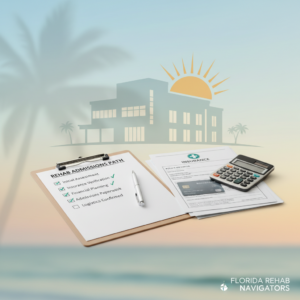
You do not need to figure this out on your own. A good admissions team will walk you through each step and provide a written estimate before you commit.
Step 1: Reach out confidentially
Most facilities offer confidential, no obligation consultations. You can contact a program that provides confidential rehab admissions fl by phone or online. Be prepared to share:
- Basic personal and contact information
- Substance use history and current concerns
- Any medical or mental health diagnoses
- Your insurance card information if you have coverage
If you are near Port St. Lucie or considering that area, rehab intake port st. lucie can guide you through local options.
Step 2: Insurance verification and benefits review
Once the admissions team has your insurance information, they can verify:
- Whether the facility is in network for your plan
- Which levels of care are covered
- Your remaining deductible and out of pocket maximum
- Any prior authorization requirements
For Miracles Recovery and similar providers, you can streamline this step by using tools like miracles recovery admissions florida or verify insurance for miracles fl. This protects you from unexpected bills and produces a more accurate rehab cost estimate in Florida.
Step 3: Clinical assessment and recommended level of care
Next you will complete an intake assessment. This may happen by phone, via telehealth, or on site. The assessment helps determine:
- Whether you need medical detox
- Which level of care is clinically appropriate
- Any co occurring mental health conditions
- Safety or medical concerns that affect placement
The recommended level of care and length of stay are the clinical foundation for your cost estimate.
If you want more detail on what to expect, review how to start rehab florida and rehab application process florida.
Step 4: Receive and review your estimate
With clinical and insurance information in hand, the admissions or financial counselor will prepare your estimate. This should outline:
- Total program cost for the recommended length of stay
- Insurance contribution and expected patient responsibility
- Options to shorten or extend treatment and how that affects cost
- Available payment plans or financial assistance
If any part is unclear, ask questions until you feel comfortable. You may also want to compare this estimate with another accredited Florida program to see how they differ in both cost and services.
For a broader orientation to enrolling, see rehab enrollment florida and rehab payment options florida.
Step 5: Plan logistics such as transportation
Finally, consider how you will get to treatment. Transportation is sometimes overlooked, but it matters for both budget and stress. Some programs help coordinate rides from airports or bus stations or can connect you with local services.
Review options covered in rehab transportation options florida so you can factor this into your total cost planning. Transportation expenses are usually not included in your treatment estimate, but they are part of the real world cost of getting help.
Balancing cost, safety, and outcomes for your family
In Florida, one in five people who die each day do so because of prescription drug overdose, which underlines how urgent effective treatment really is [2]. At the same time, the average cost for a person seeking treatment in the state has been estimated at over 50,000 dollars for a 30 day stay, depending on program type and setting [10].
The numbers can feel overwhelming. Your task is to balance three priorities:
- Safety: medical oversight, licensed professionals, and accredited care
- Effectiveness: evidence based therapies, appropriate length of stay, strong aftercare
- Affordability: a payment plan and coverage approach your family can sustain
If you approach a rehab cost estimate in Florida as a tool, not a barrier, you will be better equipped to make an informed decision. Ask for clarity. Compare what is included. Use insurance and assistance programs wherever possible. And remember that delaying help because of fear about cost can carry its own very real price.
When you are ready, connect with an admissions team that offers clear estimates, flexible payment support, and a respectful, confidential intake process. You do not have to navigate this alone, and you deserve transparent information as you choose the next right step for yourself or someone you love.