Understanding rehab payment options in Florida
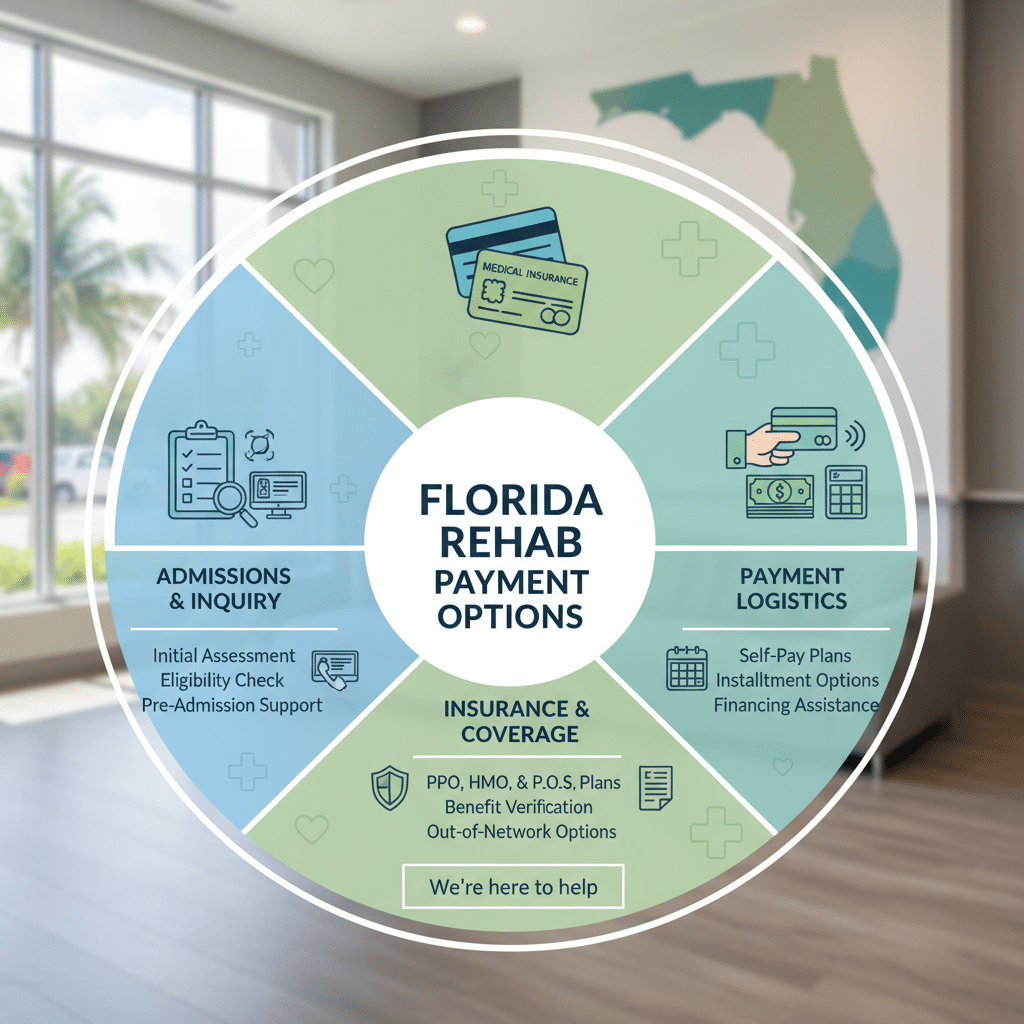
When you are exploring rehab payment options in Florida, the first thing to know is that you have more flexibility than you might expect. Between private insurance, state-funded resources, sliding scale fees, and self-pay plans, most people can find a workable path into treatment, even with limited savings or coverage.
In Florida, publicly funded programs admit people into outpatient, detox, and residential levels of care, with the majority going to outpatient services [1]. Private facilities often mirror this structure, which gives you room to match your clinical needs with a payment option that fits your budget. Your goal is to understand what you qualify for, what your insurance will cover, and how to close any remaining gaps without delaying care.
How to start the admissions and payment process
Beginning the rehab process can feel overwhelming, especially when you are worried about cost. Breaking it into clear steps helps you move forward without guessing.
You can start by contacting an admissions team to review your situation, your substance use history, and your financial picture. If you are considering Miracles, resources like how to start rehab florida, rehab intake port st. lucie, and miracles recovery admissions florida walk you through what information you need and what to expect.
During an initial call, you typically:
- Share basic demographic and contact information.
- Describe your substance use, mental health history, and any medical conditions.
- Provide your insurance details or explain if you are uninsured or underinsured.
- Discuss your preferences, such as residential care, outpatient treatment, or a program in a specific part of Florida.
Once the team understands your needs, they can help you review cost ranges, insurance coverage, and other funding options before you commit to a specific start date.
Using private health insurance for rehab in Florida
For many people, private insurance is the primary way to pay for addiction treatment. Under the Affordable Care Act, all health insurance policies in the United States must provide at least partial coverage for substance use disorder treatment [2]. Plans sold through Florida’s insurance exchange must also cover substance use disorder as an essential health benefit [1].
Common insurers that cover rehab services in Florida include Blue Cross Blue Shield, Aetna, Cigna, Humana, United Healthcare, and others, along with Medicare and Medicaid for those who qualify [3]. Coverage varies significantly by plan, which is why verifying your benefits before admission is critical.
You can streamline this step by using tools such as verify insurance for miracles fl. An admissions specialist can then explain your deductible, co-pays, out-of-pocket maximums, and whether preauthorization from a primary care provider is required, which is common for many policies [2].
In‑network vs out‑of‑network rehab in Florida
Whether a rehab is in-network or out-of-network with your insurance carrier can significantly affect your out-of-pocket costs. In-network facilities have contracts with insurers to accept negotiated rates, which often means lower deductibles and co-pays for you.
Out-of-network programs may still be covered, but you are more likely to encounter higher cost sharing or limits on coverage. Some Florida centers, such as several listed on Recovery.com, work with a mix of in-network and out-of-network plans and focus on helping you maximize any available benefits [4].
If you already know your insurer, you can explore:
These resources can help you quickly see whether a particular Florida facility aligns with your existing coverage and which locations are credentialed with your plan.
Medicaid, Medicare, and state‑funded rehab resources
If you rely on Medicaid, Medicare, or have limited income, there are still viable rehab payment options in Florida. Medicaid must cover substance abuse treatment services for eligible individuals, although Florida’s decision not to expand Medicaid can make eligibility tighter than in some states [1].
State-funded rehab programs, often supported by federal SAMHSA block grants, provide free or low-cost treatment for people who meet specific criteria [5]. You may be asked to show:
- Proof of Florida residency
- Evidence of low income or financial hardship
- Documentation of a substance use disorder diagnosis
These programs frequently prioritize vulnerable groups like pregnant women and veterans and may have waiting lists due to high demand and limited funding [5]. While you wait for a state-funded bed, outpatient or medication-assisted treatment options may be available to help you stay safe and engaged in care.
Medicare can also cover certain addiction treatment services, particularly medically necessary detox and structured outpatient care, depending on your specific plan and clinical needs.
Sliding scale fees, payment plans, and self‑pay options
Not everyone has robust insurance or qualifies for state-funded treatment. In those cases, sliding scale fees, payment plans, and self-pay arrangements can make rehab far more accessible.
Sliding scale fees adjust the cost of treatment based on your income, family size, and sometimes your insurance status, often using federal poverty guidelines as a reference [6]. For example, a standard 5,000 dollar outpatient program could cost anywhere from 0 to 1,500 dollars for individuals whose income falls below the federal poverty level [6].
Many Florida facilities also offer payment plans and other flexible arrangements for uninsured or underinsured clients, with admissions navigators who help you sort through your options [6]. If you are considering paying privately, you can learn more at self-pay rehab florida and rehab financial assistance fl, which explain how out-of-pocket payment can work alongside financing or partial scholarships.
Typical rehab costs and getting a clear estimate
Before you commit to a program, you have a right to understand what treatment will likely cost you. Pricing depends on several factors, including:
- Level of care, for example detox, residential, partial hospitalization, or intensive outpatient
- Length of stay
- Whether the facility is in-network with your insurer
- Program features, such as private rooms or specialized therapies
To avoid surprises, ask for a written cost breakdown that separates the full program rate, your insurer’s portion, and your estimated out-of-pocket responsibility. You can use resources like rehab cost florida and rehab cost estimate florida to get a clearer picture before admission.
Some Florida hospitals and rehab facilities, like UF Health Rehabilitation Hospital, also verify benefits and pre-certify admissions so that you enter treatment with a realistic expectation of coverage [7].
Whenever possible, request both a clinical recommendation and a cost estimate at the same time so that you can balance your health needs with financial realities without delaying care.
Financial assistance and hardship programs
If the remaining cost of treatment still feels unmanageable after insurance, sliding scale adjustments, and payment plans, financial assistance programs may help close the gap.
Some Florida institutions base admission primarily on your potential to benefit from rehab, then work with you to identify coverage through Medicare, Medicaid, or hospital financial assistance if you cannot pay on your own [7]. These programs often:
- Require an application that documents income and assets
- Screen you for Medicaid eligibility and ask you to work with Medicaid representatives
- Provide written policies and plain-language summaries, sometimes in multiple languages, so that you understand your options
If you are unsure where to start, rehab consulting service florida and rehab financial assistance fl can guide you through exploring scholarships, grants, and third-party financing that may fit your situation.
Transportation, location, and practical logistics
Cost and coverage are not the only factors that matter. You also need to think about where a rehab is located, how you will get there, and whether family can participate in your care.
If you live in or near Port St. Lucie, local intake options can simplify transportation and make it easier for loved ones to stay involved, which you can explore through rehab intake port st. lucie. If you are traveling from another part of Florida, ask the admissions team about:
- Airport or bus station pickups
- Shuttle services between housing and treatment campuses
- Support for coordinating travel if you are entering detox or residential care
You can find more guidance about these practical details at rehab transportation options florida. Clarifying logistics before admission reduces stress and helps you stay focused on recovery.
Location also affects your environment during treatment. Some people prefer to stay near home, while others feel safer stepping away from familiar triggers in a different part of the state. If you are looking for more privacy or comfort, rehab with private rooms florida can help you compare programs that offer additional amenities.
Confidential admissions and protecting your privacy
Concerns about confidentiality can sometimes keep people from reaching out for help. In Florida, rehab providers are required to protect your personal health information and limit how it is shared, especially when it relates to substance use treatment.
When you contact an admissions team, you can ask directly how your information will be used, who can access it, and what appears on billing or insurance records. If privacy is a priority for you due to your job, family situation, or public role, confidential rehab admissions fl explains what protections are in place and how you can maintain discretion while still using your insurance benefits when appropriate.
Enrolling in a rehab program in Florida
Once you understand your payment options and feel comfortable with a particular facility, you can move forward with enrollment. This typically involves:
- Completing an application or pre-admission questionnaire
- Confirming your insurance coverage or chosen payment plan
- Scheduling your start date, including any necessary travel
- Reviewing what to bring, what is provided, and any program rules
Many centers, including those highlighted by Recovery.com, verify insurance and pre-certify admissions ahead of time so that you know your coverage position before you arrive [4]. You can also review specific steps through rehab application process florida and rehab enrollment florida, which outline what documents to prepare and how long the process typically takes.
If you are ready to move from research into action, combining these resources with a direct call to an admissions specialist can help you secure a date, finalize your payment plan, and step into treatment with greater clarity and confidence.
Putting your rehab payment plan together
Bringing all of this information together, your rehab payment plan in Florida might include:
- Insurance benefits through a commercial plan, Medicaid, or Medicare
- In-network discounts or negotiated out-of-network coverage
- Sliding scale fee reductions based on income
- Payment plans or financing to spread costs out over time
- State-funded or grant-supported services when you qualify
Most people use a mix of these options rather than relying on just one. The key is to be transparent about your financial situation with the admissions team so that they can help you access every resource available.
If you want structured guidance as you compare programs, coverage levels, and locations, combining tools like miracles in-network providers florida, rehab cost estimate florida, and miracles recovery admissions florida can help you move from uncertainty to a clear, realistic plan to enter treatment.